Working with Helen and Our Bench to make the New Forest more accessible
I've spent more than 25 years promoting the New Forest and more than two decades working in accessible tourism.
Today I bring those experiences together, alongside my own experience as a carer
and years of listening to disabled guests, families and carers.
My aim is simple:
to help make it easier for more disabled people to experience the New Forest.
Accessibility isn't just about ramps, toilets or wheelchair symbols. It's about
having enough useful information to make your own decisions, understanding the
barriers people experience and making sure disabled people are part of the conversation.
I visit places, talk to businesses and organisations, ask questions, share what I
find and listen to the people who experience access barriers themselves.
I don't speak for every disabled person. Nobody can. But I can help make sure
disabled people's voices are part of the New Forest conversation.
The New Forest has always been home
I've lived here, worked here, raised my family here and spent much of my working
life helping other people discover the New Forest.
In 1998, I built my first New Forest tourism website at
newforest.demon.co.uk.
It was a very different world. Tourist Information Centres were important sources
of local knowledge, brochures arrived through the post and booking accommodation
often involved picking up the telephone.
My parents ran the New Forest Holiday Bureau, an independent
telephone referral service helping visitors find somewhere to stay. I took that
idea online, adding information about accommodation, places to visit and things to
do around the New Forest.
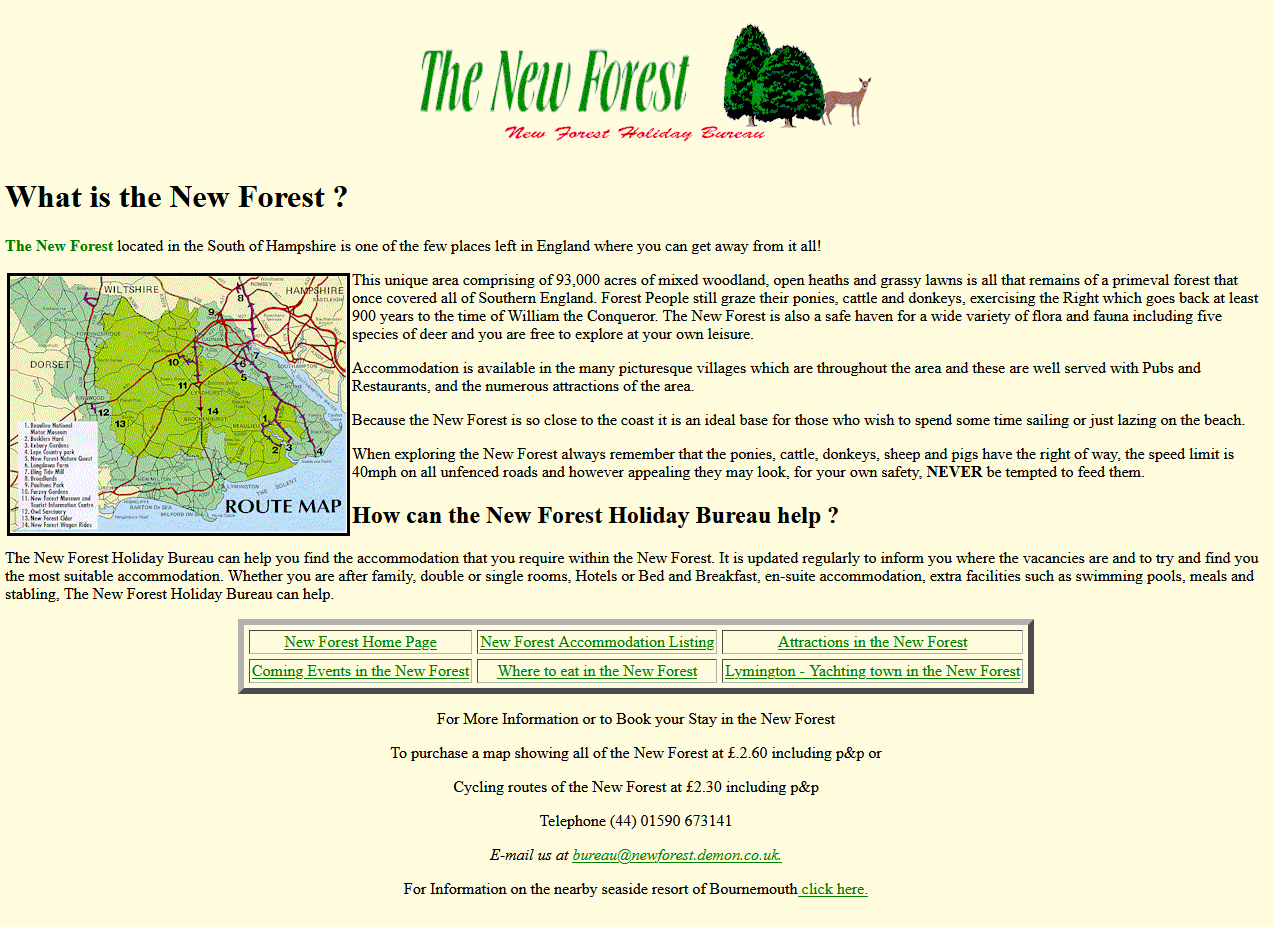 Where it started: my original New Forest website in May 1998.
Websites looked rather different then!
Where it started: my original New Forest website in May 1998.
Websites looked rather different then!
Explore the New Forest
As the internet developed, so did the way I promoted the area.
In 2001, Explore the New Forest moved to its own domain and
developed into an independent online guide. I photographed the Forest, wrote about
places to visit, promoted local accommodation, shared events and answered visitors'
questions.
By 2018, Explore the New Forest was celebrating
20 years of promoting the New Forest.
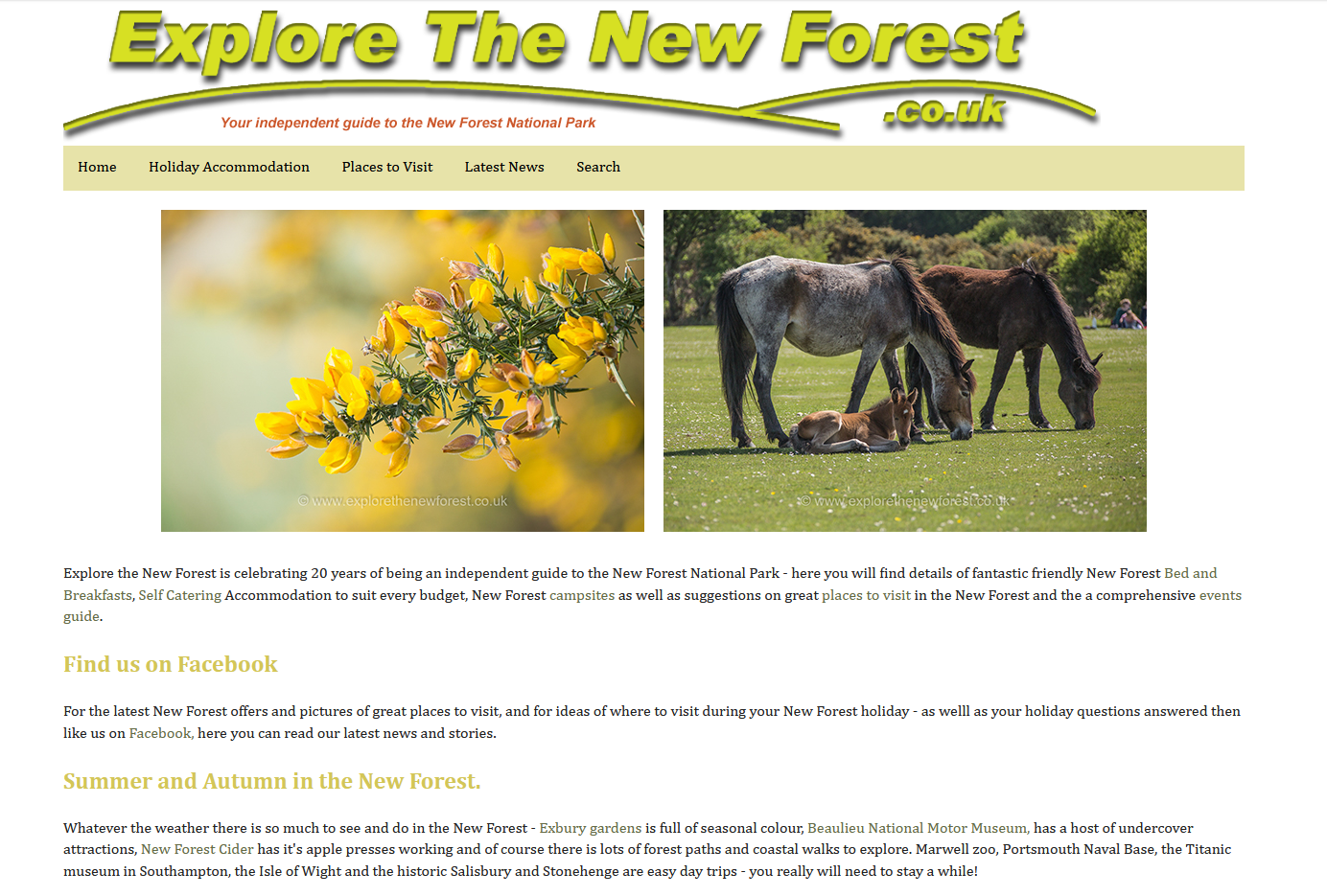 Explore the New Forest in 2018, twenty years after I first started promoting
the area online.
Explore the New Forest in 2018, twenty years after I first started promoting
the area online.
But while the internet was changing, my life was changing too.
Seeing the New Forest differently
My mum had been a wheelchair user outside the home for many years. As her mobility
changed, places we might once have visited without much thought began to require
more planning.
I also became part of the sandwich generation of carers, while Our Bench was
introducing me to disabled guests, families and carers with many different access
needs.
I began to realise how little the word "accessible" actually tells us.
Our guests needed practical information. How far is the disabled parking from the
entrance? Is there a step? What's the surface like? Is there enough room in the
toilet? Can tables be moved? Is there somewhere to rest?
So we asked questions, made phone calls and visited places.
I learned how much the information nobody thought to mention can matter.
From Explore the New Forest to Our Bench
By 2018, I was spending much more of my time developing and marketing Our Bench
alongside caring and family life. I couldn't give everything the attention it deserved.
In 2019, after more than 20 years, I closed the Explore the New Forest website and
concentrated my time and energy on Our Bench.
But I never lost my connection with the wider New Forest.
Today, the two parts of my experience are coming together again.
I'm still exploring the New Forest, talking to people, discovering places and
sharing information, but I'm looking at it through very different eyes.
I know the New Forest. I know accessible tourism. And I know how much the
details matter.
Sharing what I've learned
When I visit somewhere, I naturally think about our guests.
Could they get in? Would they be able to use the facilities? Is there something
here they would particularly enjoy? Is there something they would need to know
before deciding whether to visit?
When I find a great experience, I often add some of those details to the Our Bench
website. Through conversations with our guests, I've also learned which practical
details matter to them, including things a business may not realise could affect
someone's visit.
I won't simply tell you somewhere is "accessible", because what works for one
person may not work for another.
I'll share my experiences, what I know about access, stories from places I've
visited and things I've learned from disabled guests, families, carers, businesses
and organisations.
I'll give you information. You can decide whether it works for you.
A resource for learning about accessibility
I also want Accessibility in the New Forestto help businesses and organisations understand
what they can do.
Not every improvement requires a large budget, building work or specialist equipment.
Sometimes better access starts with describing what is already there. Sometimes
it's moving something, changing how information is provided, offering another way
to access a service or simply noticing a barrier that hadn't previously been considered.
I'll share ideas, examples and practical things I've learned that could help
businesses, attractions and services become accessible to more people.
Places change, so access information will change with time too. I'll date information
where that's useful and make it clear when I'm describing my own experience.
This isn't intended to become a definitive list of places that are or aren't accessible.
My aim is for Accessibility in the New Forestto become a growing learning resource about
how sometimes surprisingly simple changes can enable more people to visit,
participate, become customers or access services.
If you're a New Forest business
You don't have to become accessible to everybody overnight, and improving access
doesn't always mean building work or expensive equipment.
You may already be doing more than you realise.
Sometimes the first step is simply understanding what you have and describing it
clearly. Sharing that information can cost very little, but it might help somebody
decide that they can visit your business.
Accessibility doesn't have to start with spending money. It can start with
understanding, information and a conversation.
Why should accessibility matter to me?
If you've never had to think about access, it's easy not to notice the barriers
that can prevent somebody else from joining in.
Disability can affect any of us, our families, friends, colleagues and communities.
Accessibility isn't about creating a separate New Forest for disabled people.
It's about making the New Forest we already share easier for more people to be part of.
A voice for better access in the New Forest
I have experience, local knowledge, curiosity and a willingness to ask the
questions that sometimes aren't being asked.
When disabled people tell me what would make a difference, I listen.
When businesses are doing something well, I share it.
When a simple conversation could improve something, I want to be part of it.
And when businesses, tourism organisations, community groups or the media are
talking about accessibility, I want disabled people's experiences to be part of
that conversation.
Because accessibility isn't somebody else's issue.
It's about who gets to take part.
After more than 25 years of promoting the New Forest, my purpose has evolved.
It's no longer simply about helping people discover what the New Forest has to offer.
I want to help make sure more people have the opportunity to experience it.
Accessibility, conversations and change
Here I'll share places I've visited, conversations I've had, practical information
I've discovered and things I've learned along the way.
Some are written for disabled people looking for useful information. Some are for
businesses wondering what they could do differently. Others explore the wider
conversations around disability, inclusion and accessible tourism.
Start here: What is an Access Statement?
Saying somewhere is "accessible" doesn't tell a disabled visitor very much.
An Access Statement provides practical information about a place so people can
understand what is available before they arrive and decide for themselves whether
it meets their individual needs.
Read: What is an Access Statement? →
Visiting Lymington Community Centre
I went to Lymington Community Centre for a business networking event and came away
having discovered a great example of why venues should tell people about the access
they already provide.
From parking and level access to the café and an unexpectedly spacious accessible
toilet and changing area, these are the details that can help somebody decide whether
to visit, and this appeared to be a hidden gem!
Visited: September 2026
Read about my visit →
Business networking: taking accessibility into the conversation
Accessibility improves when people talk. Connecting with businesses across the
New Forest gives me opportunities to listen, share experiences and encourage
conversations about barriers and opportunities that may not previously have been considered.
Read about business networking and accessibility →
Sometimes it starts with one question
Making somewhere more accessible doesn't always begin with an expensive project.
Sometimes one question starts a conversation, reveals something that has been
overlooked and creates an opportunity to do something differently.
Read: One Question →
Having better conversations about accessibility
Businesses can worry about saying the wrong thing when talking about disability.
Listening, asking questions and being willing to learn can be far more useful than
avoiding the conversation altogether.
Read about Accessibility Conversations →
Why an accessible business can be better for everyone
Thinking about access can benefit disabled people while also making experiences
easier for many other customers and visitors. Accessibility is also about something
very ordinary: disabled people are customers, colleagues, friends, family members
and part of our community.
Read: Accessible Business for Everyone →
Designed for accessibility
Good access is much easier when it's considered from the beginning. Drawing on
what we've learned through Our Bench, I look at designing with accessibility in
mind rather than trying to solve every barrier afterwards.
Read: Designed for Accessibility →
Autism, emergency services and feeling safe
Accessibility isn't only about physical barriers. Understanding, communication
and knowing what might happen in an emergency can make a significant difference too.
Read about Autism and Emergency Services →
Our Bench becomes a New Forest Guardian
Accessibility sits within a much bigger picture of welcoming people to the New Forest
and caring for the place we share. Becoming a New Forest Guardian connects our work
at Our Bench with that wider responsibility.
Read about becoming a New Forest Guardian →
Be part of the conversation
If you're disabled, a family member or carer and there's information you wish
businesses and places provided, I'd like to hear what matters to you.
If you're a New Forest business or organisation and accessibility feels complicated,
expensive or you're simply unsure where to begin, I'm happy to share what I've learned.
And if you're a journalist, tourism organisation or community group looking at
disability, accessible tourism or access in the New Forest, I'm always happy to
have a conversation.
Contact Helen Renouf at Our Bench →
Page updated: September 2026